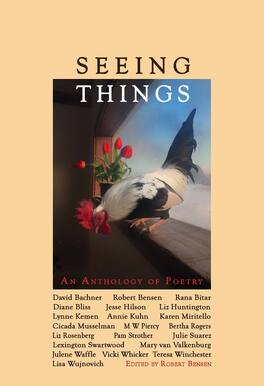
Another cover story for The O-Town Scene!
Look Sharp: Bobby Sharp's whirlwind style and glass works
by Annie Kuhn
“My head is spinning,” says Bobby Sharp, owner of B. Sharp Studio & Gallery. He’s referring to his recent project for the Jimi Hendrix Foundation and the resulting blast of publicity. I am halfway through my interview with him and an image of the Looney Toons’ Tasmanian Devil character pops in my head. But it’s all wrong. Sharp, at age 45, is not a whirlwind of unfocused energy. Just the opposite, in fact. He is as sharply focused on his work as his name would imply, despite—or perhaps because of—the challenges he’s had to overcome.
Breaking Free
Sharp is mildly autistic and severely dyslexic, but as a child he didn’t know that. He only knew he was different. He didn’t think the way others did and couldn’t read or write at all. Special education classes didn’t seem to help. If it weren’t for Matt Straub, the teacher who became a mentor to him, Sharp says he never would have stayed in school. But he did stay and was placed in a carpentry class to learn basic skills so he might be employable. To everyone’s surprise, Sharp excelled at woodworking. His unusual way of thinking became a gift that allowed him to create masterpieces with wood.
After graduating, Sharp found work as a DJ and started crafting fine furniture pieces. He didn’t need to read to make a living. But he wanted to read and decided to teach himself. He hired tutors, took community college classes and worked at it diligently. By age 26, Sharp could read and write. Nothing would hold him back anymore!
Fast Forward
The only thing that could hold Sharp back these days is time. He’s doing so much that it’s difficult to comprehend it all. No wonder his head is spinning! He is an artist, a teacher, a gallery owner, and a brilliant marketer, too.
How does he do it? First, he’s an observer. He studies nature—stones, small twigs, bright flowers. His love of nature manifests in his delicate botanical compositions. But he also observes successful people and emulates them. He has a gift in being able to see a product fully-formed in his mind, whether that product is an art piece or marketing plan.
Second, self-doubt never plagues Sharp. “I go after what I want,” he says. He has knocked on the door of a Manhattan art dealer’s home and cold-called galleries, museums and TV networks. If he gets a negative response, he doesn’t take it personally. “Maybe they’re having a bad day,” he says, and calls their competitor—or their boss.
His art has evolved from furniture and sculpture to glasswork and more. Currently he’s working with an acrylic casting technique he invented, creating three-dimensional pieces with nature themes and a series based on Woodstock era musicians. Using molds he designs, Sharp layers bits of hand-painted glass and either organic materials for the botanical compositions or torn pieces of photos for the Woodstock series. He encapsulates them in acrylic to make a “shelf still life sculpture.” These freestanding pieces can also be used as colorful windows in interior walls, as can be seen at the Hoffman Lane Bistro in Cooperstown.
Pleased with his Hendrix piece from the Woodstock series, Sharp envisioned partnering with the Jimi Hendrix Foundation. He contacted James Bray, coordinator of the foundation’s Art for a Cause fund-raising program and suggested they consider Sharp’s work. Bray, at first startled by the bold proposition, became intrigued. Together they decided to do a new piece for the foundation, based on never-before-seen photos of Hendrix. It’s an ambitious project, with an expected completion in April 2012. This project has resulted in radio and newspaper interviews around the country. While pleased with the attention, it's distracting Sharp from his work.
What’s Happening
In between interviews, Sharp is working on clothing based on his art. He has T-shirts featuring his Woodstock designs that can soon be purchased through his website, and he is developing high-end women’s fashions featuring his botanicals. Furthermore, he is communicating with teachers for the January session of his art school, which will feature glass blower Art Reed (Sweetwater Glass), screen-printer Orion Palmer (ORabbit Designs), and Sharp teaching business marketing. He is also preparing his gallery for a show in January, featuring his own work and the paintings of post-modernist Lio Magat and architectural artist Peter Brandt.
No wonder Sharp works all day long and is always in a hurry. He confesses that he got a speeding ticket recently. “They don’t understand,” he says of the officer and the clerk who handled the fine. “I have to move fast.” I ask if he’s making up for lost time. He pauses, then nods. “I have to do it all now—now that I can.”
_
(published November 24, 2011)
My first cover story for The O-Town Scene weekly arts newspaper in Oneonta, NY.
(published October 20, 2011)
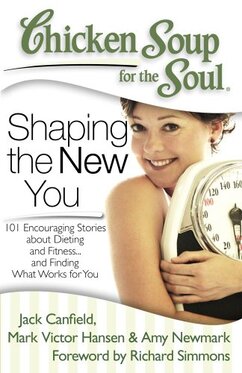
Excerpt from my essay, "Photographic Evidence"
Photos can be powerful. Most people can probably relate to seeing a photo of themselves they hated. The absolutely worst are those photos that make us look FAT. I have one particular fat photo of myself that I've kept around for a laugh, but it wasn't funny the first time I saw it. I was in college and, sure enough, I'd gained "the freshman fifteen." Only in my case it was probably a bit more than that. The photo proved it. Thus began my yo-yo dieting cycle. I was terribly unhealthy. I'd skip meals or only eat salad until I went insane, then I'd have 3 desserts for dinner in the school cafeteria. I managed to get my weight back down enough to return my borrowed clothes, but I was continued doing the yo-yo thing through my senior year.
In spring of that year, I met the man who would become my husband: Chris. My weight was pretty good due to my hectic senior schedule, although I still worried about my looks. Chris, on the other hand, didn't seem to see it. In fact, after a few weeks of dating, he insisted on taking my portrait. He was quite the photographer, so he took more than just a shot or two to show me off. He took a whole roll of film—36 pictures of me surrounded by spring blossoms in his parents' back yard. Clearly, Chris thought I was beautiful. I'd never been too sure about that.
They turned out to be powerful photos...
Photos can be powerful. Most people can probably relate to seeing a photo of themselves they hated. The absolutely worst are those photos that make us look FAT. I have one particular fat photo of myself that I've kept around for a laugh, but it wasn't funny the first time I saw it. I was in college and, sure enough, I'd gained "the freshman fifteen." Only in my case it was probably a bit more than that. The photo proved it. Thus began my yo-yo dieting cycle. I was terribly unhealthy. I'd skip meals or only eat salad until I went insane, then I'd have 3 desserts for dinner in the school cafeteria. I managed to get my weight back down enough to return my borrowed clothes, but I was continued doing the yo-yo thing through my senior year.
In spring of that year, I met the man who would become my husband: Chris. My weight was pretty good due to my hectic senior schedule, although I still worried about my looks. Chris, on the other hand, didn't seem to see it. In fact, after a few weeks of dating, he insisted on taking my portrait. He was quite the photographer, so he took more than just a shot or two to show me off. He took a whole roll of film—36 pictures of me surrounded by spring blossoms in his parents' back yard. Clearly, Chris thought I was beautiful. I'd never been too sure about that.
They turned out to be powerful photos...